
3 Design Tactics to Better Connect Your Museum to Your Town
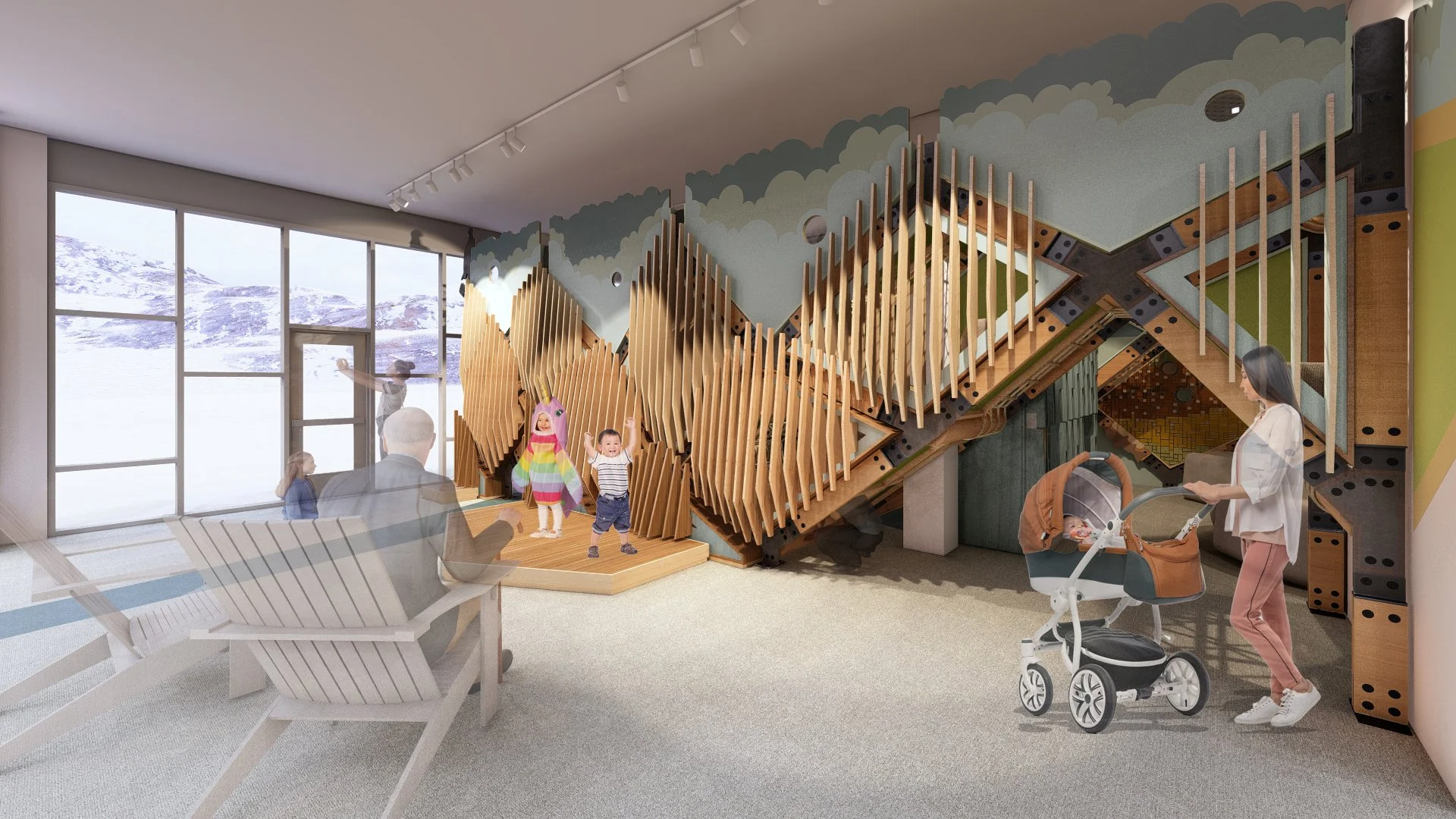
^ Wilderness Climber, Jackson Hole Children’s Museum, Jackson, WY
As museum planners and designers, one of the most frequent questions we hear our client-partners ask is: How can our museum and exhibit design be more [Denver], [Brooklyn], [Taipei]... [insert your town here]?
This is an understandable question with potentially complex answers. Connecting your museum’s design to your community can be a great source for artistic inspiration and civic pride. Let’s first further unpack why people may want their museum to represent some aspects of their city or region, then I’ll offer a few surprising and meaningful ways to do this at your venue.
We all want a sense of place.
Remember back to when you were a child. Perhaps you placed your most beloved stuffed animal on your bed (I had a blue corduroy dragon). And maybe you hung posters on your bedroom walls honoring your favorite athletes or rock stars (Michael Jordan and Eddie Van Halen, in my case). We all possess an animal instinct to claim anonymous spaces and make them personal places. This desire goes beyond merely marking territory and establishing safety. Just as our ancient ancestors pressed their painted hands on cave walls, we strive to signify places as special to confirm our unique existence.
We see this same instinct, albeit at a different scale, when good architects plan a new city park. A generic approach to park design is to bulldoze a few acres, plant some off-the-shelf benches, and bolt-down the same tried-and-true playground elements that you see everywhere. This is a fast and expected approach for your school or neighborhood pocket park, but for those aspirational projects seeking to transform a city, encourage tourism, catalyze local economies, and ignite the imagination, the generic, anonymous approach will not suffice.
When Chicago decided to transform its downtown by turning a sea of ugly train tracks and monotonous parking lots into one of the most vibrant civic gathering places in the world, can you imagine if they had opted to just replicate what they saw at a park in New York or Toronto or San Francisco? If people can do it or see it here, why go there?
It’s important to understand that Chicago’s Millennium Park succeeds (it draws over 20 million annual visitors) because it avoided the most common design trap when attempting to define a unique sense of place. Planners wisely resisted the impulse to make something identifiably “Chicago.” Nowhere in the park’s numerous artscapes, bridges, amphitheaters, and gardens will you see overtly nostalgic references to the Great Fire of 1871, deep dish pizza, or the Cubs and Sox. There also aren’t any miniature climbable versions of the city’s iconic skyscrapers. Millennium Park wisely rejects cartoon pastiche or a Chicago parody. Superficially copying a history, style, or culture without deeply understanding what moves people to sustained action will inevitably result in disappointing designs that leave people craving for more authentic connection. Instead, this park is a thoughtful composition of unique, provocative objects and places, beautifully orchestrated to experience life in ways you cannot do anywhere else on the planet. And now, only a few years after its creation, Millennium Park is what many people think of when they think of Chicago.
These examples help to illustrate the instinctive allure and promise of unique place-making, but how can museums both honor and connect with their specific region AND prioritize the creative license required to meet people's need for meaningful connection?
Here are 3 design tactics for your consideration:
Use local talent wherever possible.
When we’re planning and designing museums, we’re always thinking about what local resources could be leveraged. This isn’t always 100% possible. Sometimes a project requires expertise living 3 time zones away. But more often than not, if we design with this intention and articulate design details through excellent drawings and technical specifications, then we increase our chances of finding someone down the street that’s willing to join the team. We’ve used local kitchen cabinet makers to build maker’s spaces; the onsite HVAC duct contractors to fabricate basins for a water exhibit; car upholsterers to sew beautiful cushions for a nursing gazebo; steel welders up the street to construct a one-of-a-kind climbing structure. This kind of building-local scrappiness requires a good deal of TRUST, coordination, timely decision-making, and experienced problem-solving, but the potential payoffs are a more efficient budget; unexpected artisan involvement; and a project built by and for your community.
Identify a land or climate feature unique to your region and EXAGGERATE it.
Is your museum located in or near an arid, sunny desert, a bustling ocean port, rolling forested hills, or a city center built around a meandering river? Every region has its distinctive features, but many children’s museums choose to represent these features, if at all, by reducing them to flat, 2-dimensional, cartoon cut-outs. This robs guests of the opportunity to deepen their connection to your region through gaining new insight, conceptual awareness, or inspiration from these features.
For example, let’s envision a children’s museum located in the central United States near the Nebraska Sandhills. You could select a few interesting and evocative landscape features to focus on, such as the sand dunes and wild prairie grasses that provide hiding places for many kinds of animals. Perhaps your exhibit is outside and features super-tall sand dunes that invite children to zoom down on special sleds. Maybe you create a dense, 20-foot tall thicket of hollow wooden poles that form a mysterious maze for playing hide-and-seek. When the wind blows, the poles gently sway, knocking into one another to make soothing, rhythmic sounds, surrounding you in cool dappled light and swirling shadows.
This artist’s tactic of selective exaggeration is akin to a scientist using a magnifying glass to more closely study a butterfly’s wing. Amplification can feed insight.
Involve all 5 of your senses when evaluating your design ideas.
Let’s say a children’s museum wants to honor their city’s rich and proud Latino heritage. Initial exhibit concepts involve the simulation of a public market setting where children can pretend to buy and sell plastic the fruits, vegetables, and other ingredients you might find in various Latino cuisines. Maybe a few signs in Spanish hang alongside the colorful papel picado paper flags we see at many Mexican celebrations.
You’ve probably seen some version of this exhibit concept before. It is motivated by good intentions of inclusion and connection, and often embraces the opportunity to work directly with communities they wish to celebrate, but it falls short of being truly memorable and meaningful because it reduces everything to the sense of sight. It’s a flat experience and flat experiences do not inspire active, creative play or emotionally-resonant connections.
To design a fuller experience, let’s consider more of the senses. What if the museum added story times that presented exciting stories from Latino authors? Maybe these story times take place in a special, relaxing place designed to be warm, welcoming, soft, and cozy. Maybe the walls feature a gorgeous mural by a local artist, inspired by Frida Kahlo and Diego Rivera. Adding to this, what if the museum also had a rollout teaching kitchen where children and their grown-ups could flatten masa, use a real comal, and make their own warm tortillas to taste? Imagine how delicious the museum would smell? Go one step further and design a place where guests can fully FEEL various musical beats by laying on top of bed-sized, wooden tongue drums while other guests softly play along with a Cuban salsa, a Colombian cumbia, or a Brazilian samba.
Most museums aspire to create lasting attachment for its guests, staff, and the wider community. Creating a museum that truly reflects its community goes beyond appropriating easily recognizable symbols or the cartoonification of historical references. By collaborating with local artisans, creatively exaggerating distinctive natural or climate features, and engaging all five senses, museums can foster deeper emotional connections and create more memorable places that feel uniquely, authentically tied to their communities.
