
Our Gray Town (and what we can do about it)
If given the choice, would you rather eat a warm, homemade meal bursting with flavor or a processed, tasteless lump from a package? Would you choose to watch a thrilling, well-crafted movie unfold or sit through a lame, predictable pharmaceutical ad you’ve seen a thousand times?
Most of us wouldn’t hesitate to choose the richer, more rewarding option. So why, when it comes to our shared public spaces, do we so often settle for blandness?
The small Midwestern town I’ve lived in since 2019 is a nice town. But it’s also a gray town. By “gray,” I am referring to its lack of vibrancy, beauty, and delight amongst its buildings, streetscapes, and playgrounds. What first drew me here was the glittering river winding through the town center. But what has stood out over time is how aggressively uninspired our built environment is. The village planners seem to have a super-sized appetite for banks, fast food chains, and big box retail. The result? A townscape that feels functional but generically joyless.
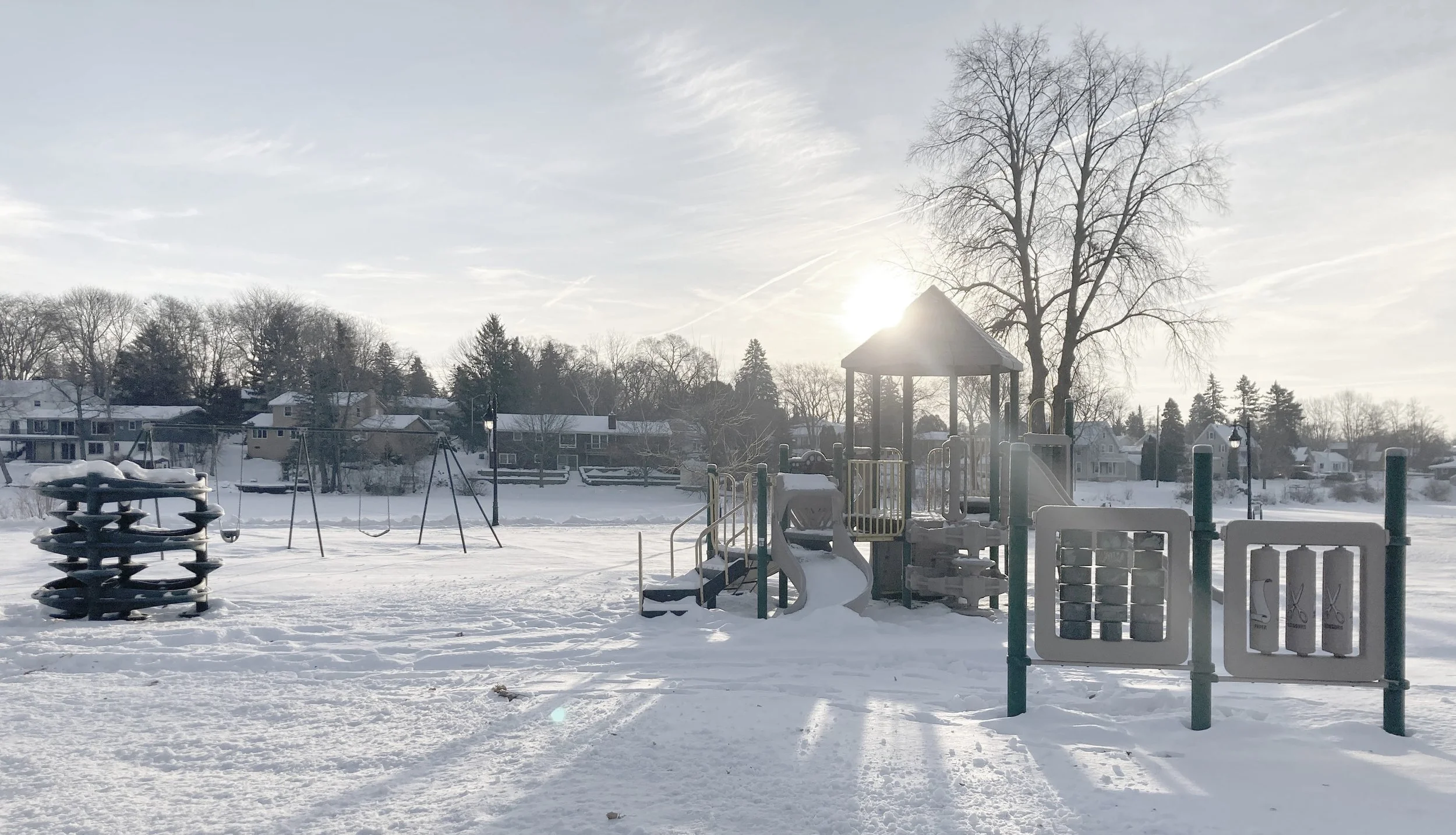
Dingy water towers loom like stained monuments to missed opportunity. The high school’s blank brick façade resembles a detention center more than a temple to learning. And our built park and playground features, though technically adequate, could be dropped into any suburb in America. They serve a purpose, yes, but they don’t lift the spirit or stir love for our community.
And this isn’t just an aesthetic issue. This is a public health issue. According to British designer Thomas Heatherwick in his book Humanize: A Maker’s Guide to Designing Our Cities, boring built environments don’t just disappoint us—they can actually make us sick. He challenges the idea that “the absence of boredom” should be considered a luxury, arguing instead that beauty and creativity in our surroundings should be a right, not an indulgence for only the wealthy.
Of course, what feels boring is subjective. But one can objectively observe many places in our built environment that lack playfulness, joy, and imagination.
So, what if we stopped settling?
What if we chose to wrap our drab water towers with colorful, one-of-a-kind, locally-sourced artwork that celebrated our town as a unique place for creative achievement and natural beauty? What if the front of our high school reflected not institutional monotony but a bold, dynamic statement about curiosity, excellence, and hope for the future? What if we chose to invest in parks and playgrounds that featured distinctive landmarks and cherished, regional attractions that could spur economic growth?
There are legitimate reasons why someone may intentionally choose boring and bland things over more exciting and interesting options, but often, the person doesn’t even realize there are other, more vital options available. By continuing to ignore our grayness, we are depriving our community and ourselves of happier, healthier lives. Let’s stop receiving gray by default. Let’s stop pretending gray is our only option. Whenever funds are allocated for our shared spaces: When new street lamps or welcome signs are needed… When a park gazebo or pedestrian bridge needs refurbishing… When we debate what to do with an under-utilized property… We must actively seek opportunities that nourish our souls, not settle for ones that quietly drain it.
