In a series of recent articles, I’ve explored how character-building exhibits at children’s museums can cultivate the virtues of independence, courage, and curiosity. In this article, I turn to the virtue of perseverance. This virtue, also referred to as “determination,” "wherewithal," and “grit,” is another fundamental need of childhood character-building that museums can help parents encourage.
What is Perseverance?
Perseverance is often described as the ability to stay resilient in the face of hardship - to keep pushing forward despite setbacks. This is a crucial life skill in a world where few things are handed to us on a silver platter, but when framed this way, it can be hard to know which kinds of challenges actually help build perseverance, and which simply overwhelm or discourage. Parents intuitively understand that you can’t just throw a child into the deep end and expect perseverance to emerge. Hardship alone isn’t enough. So what does an effective, perseverance-building experience actually look like?
To answer this, it helps to shift the emphasis away from the experience of hardship and toward incremental success. Reframed more positively, perseverance isn’t only about overcoming obstacles; it’s about sustained effort, repeated practice, and the step-by-step pursuit of a goal. It reflects a choice to keep striving — even when the outcome is uncertain or the reward feels far away. Perseverance is what bridges the gap between intention and achievement.
How Museums Try to Foster Perseverance
It might be tempting to assume that museums foster perseverance simply by offering exhibits at various levels of difficulty. In this view, a young child might attempt a more complex exhibit, fail to succeed, and later return — older, more skilled, and more determined — to finally meet the challenge. Over time, the child gradually rises to each new level.
While this might seem like incremental success, it’s often a diffuse experience. The easier exhibits and the more challenging ones might be unrelated, located in separate parts of the museum, and disconnected in a child’s mind. The sense of progression - and the perseverance it fosters - can easily go unnoticed.
A Better Way to Emphasize Incremental Success
Museums can do more. They can bring a child’s incremental progress into the foreground, making it visible and intentional in the design of the exhibit itself.
For example, imagine a slide exhibit with three gleaming steel slides placed side by side. Each slide is progressively steeper and longer, offering a faster and more thrilling ride. Each requires incrementally more skill and courage. The side-by-side arrangement of the slides acts as a kind of progress meter, clearly signaling the growing challenge. When a child moves from one slide to the next, their perseverance is both experienced and seen. The child knows exactly where they are on the path toward the grandest sliding experience, and they feel a mounting achievement.
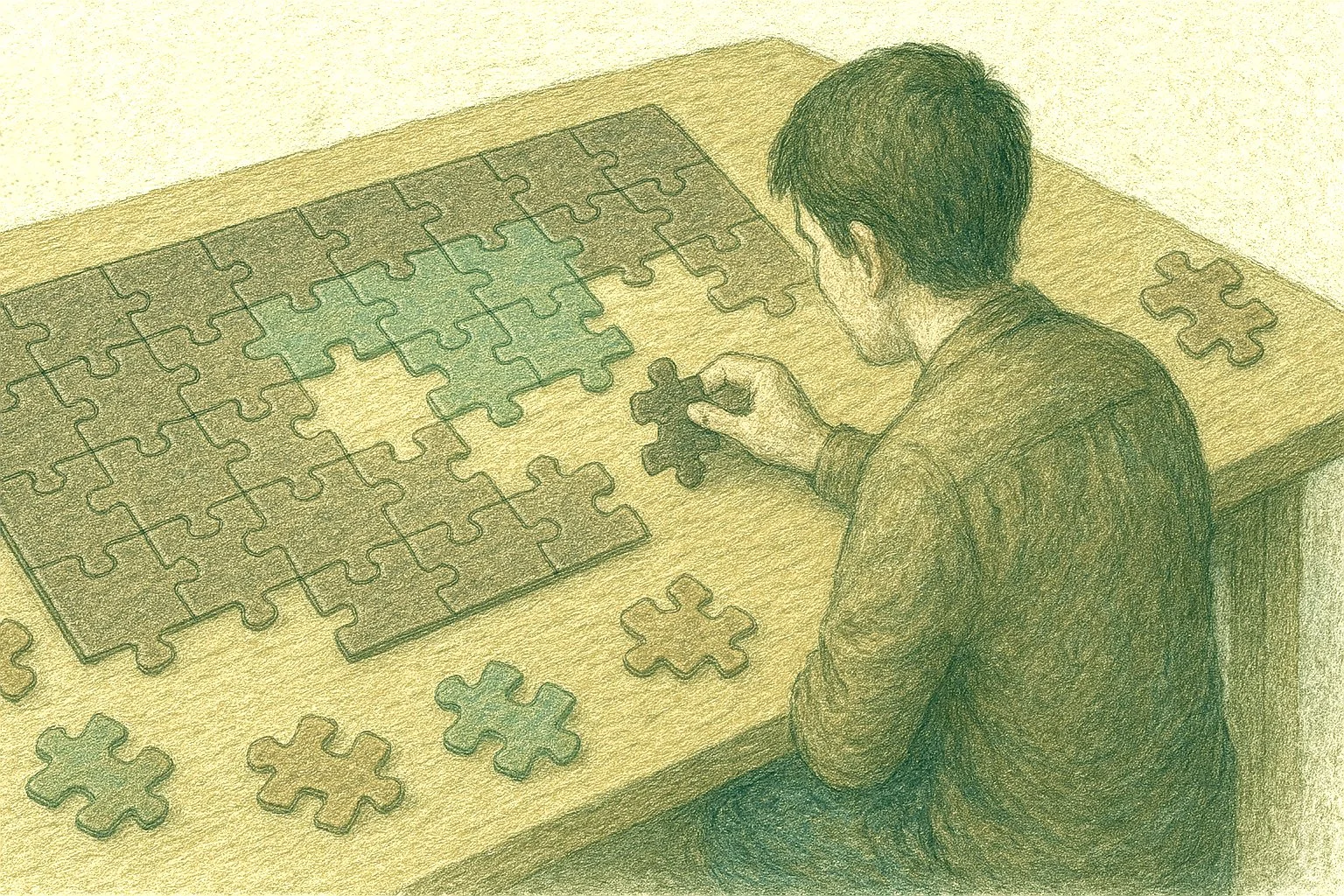
Another example is the classic jigsaw puzzle. The shape and arrangement of the pieces offer a built-in measure of progress. Each interlocked piece marks a small success. Each visible gap points the way forward. Milestones naturally emerge — like the satisfying moment when the border is completed. The puzzle both requires and embodies perseverance, making both the process and its rewards visible along the way.
Educational psychologist Lev Vygotsky called this kind of process scaffolding: the breaking down of a complex task into smaller, manageable steps. When a museum exhibit is scaffolded well, each stage of an experience provides visual cues that help a child understand where they are in relation to a larger goal. The exhibit itself reveals each step of progress. Even when a caregiver isn’t present to name the achievement, the child can see it, feel it, and begin to internalize the deeper lesson: that perseverance is an incremental process, and they are capable of carrying it forward.
By highlighting incremental success, children’s museums can transform perseverance from an abstract virtue into a lived experience. Exhibits that make progress visible — whether through scaffolded challenges, clear milestones, or step-by-step achievements — help children understand that perseverance is not about enduring endless struggle, but about building confidence through steady, achievable growth. When young visitors leave the museum with the feeling, “I can do hard things if I take it one step at a time,” they carry with them a skill far more enduring than any single accomplishment: the belief that perseverance is within their reach.